Search Results
116 results found with an empty search
- Need Help Now? Find Free Local Resources in Minutes
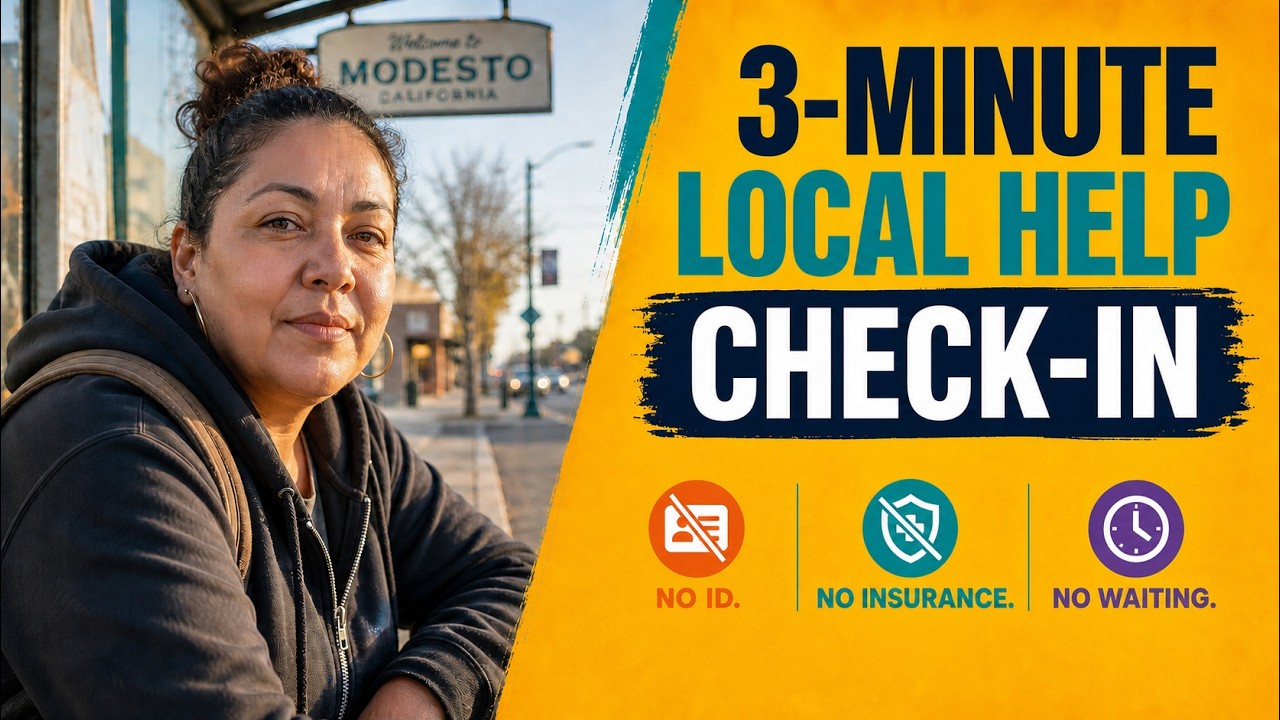
If you’re in crisis and searching for free help in Stanislaus County, you don’t have time to click through a hundred websites and call phone numbers that never pick up. Whether you’re looking for emergency housing, food pantries near you, free mental health services, low‑cost medical clinics, legal aid, or financial assistance, the fastest way to see all your local options in one place is through Help Is Hope. Their Free Resources page includes the Total Resource Check-In — a simple online tool that helps you find local community resources, even if you don’t have insurance or don’t have Medi‑Cal. You can start right now by visiting HelpIsHope.org and clicking “Free Resources,” or going directly to https://www.helpishope.org/resources. What Is the Total Resource Check-In? The Total Resource Check-In from Help Is Hope is a quick online form that turns what you’re going through into a personalized list of resources, including: Emergency and low‑income housing programs Local food banks and food pantries Free or low‑cost mental health counseling Free community clinics and health centers Legal aid and tenant rights help Utility assistance and rental assistance Job training and employment programs Transportation and disability support Instead of searching “resources for homeless adults in Modesto” or “free mental health help near me” over and over, you can fill out one form and get everything in one email. This tool is designed for people with Medi‑Cal or without Medi‑Cal, with insurance or without insurance, and for people who are uninsured, low‑income, or currently homeless. If you’re asking “Where can I get help in Stanislaus County right now?” — this is for you. How It Works (Step by Step) Using it is easy and works on any phone, tablet, or computer. 1. Go to the Help Is Hope Free Resources page Visit HelpIsHope.org and click Free Resources, or Go directly to https://www.helpishope.org/resources 2. Check the boxes that match your situation The Total Resource Check-In asks about common needs like: Homeless or at risk of homelessness No food or low on food Depression, anxiety, or mental health crisis Addiction or substance use support Unpaid bills, shut‑off notices, or debt Legal problems, eviction, or landlord issues Need a doctor, clinic, or medical help No transportation or trouble getting to appointments Need help with Medi‑Cal, CalFresh, or benefits Just got out of jail or prison and need reentry support You only click boxes. No long essays. No repeating your story to multiple agencies. 3. Submit the form Once you hit submit, the system takes over. 4. Get your resource guide in your email (usually under 5 minutes) You receive a custom resource guide with: Names of local organizations and agencies Addresses, phone numbers, and hours What each place does and how to get started Options to connect with Help Is Hope for free peer support, survival kits, and ongoing help If you don’t have an email address, you can still use the tool by visiting Help Is Hope in person and having your guide printed out for you. What Kind of Free Help Can It Find? Through the Help Is Hope Free Resources page and the Total Resource Check-In, you can find: Housing & Shelter Emergency shelters Transitional and low‑income housing programs Homeless outreach and housing navigation Food Assistance Food banks near you Food pantries in Modesto and Stanislaus County Hot meal programs and community food distributions Mental Health & Substance Use Support Free or low‑cost counseling Crisis hotlines and 24/7 mental health support Substance use treatment, recovery groups, and harm reduction resources Medical & Health Care Free community clinics Low‑cost health centers for people with or without insurance Help with Medi‑Cal, Medicare, and other health coverage Legal & Tenant Rights Help Eviction prevention resources Tenant rights organizations Low‑cost or free legal aid Money, Bills, and Benefits Utility bill assistance Rental assistance programs (when available) CalFresh (food stamps), Medi‑Cal, and other benefit navigation Jobs, Training & Income Job search and employment programs Job training and certifications Income‑earning opportunities, including community programs through Help Is Hope Transportation & Disability Support Help with rides to appointments Mobility and disability resources Support for seniors and disabled adults All of this is based on your answers, your ZIP code, and your situation. With or Without Medi‑Cal: You Can Still Use This Many people think they need insurance or Medi‑Cal to access help. The Total Resource Check-In is different. It is made for people: With Medi‑Cal Without Medi‑Cal With private insurance With Medicare With no insurance at all If you do have Medi‑Cal, the system can help point you toward extra support programs you might qualify for, like Enhanced Care Management (ECM), which provides high‑touch care coordination for people with complex needs. If you do not have Medi‑Cal, you will still receive a full list of community resources and free or low‑cost services that are open to uninsured and low‑income adults. You do not need to know your exact plan or coverage to get started. You can simply go to HelpIsHope.org, click Free Resources, and fill out the form. Why Start at Help Is Hope? There are many websites that list services. But when you’re overwhelmed, in crisis, or low on energy, you need something that is: Fast – one form, one email, everything in one place Local – focused on Stanislaus County and nearby areas Simple – click boxes, not long applications Dignified – no judgment, no proving you “deserve” help Help Is Hope is a local, peer‑led nonprofit that understands how hard it is to navigate the system when you’re already struggling. Their Free Resources page is designed to be a first step that anyone can take — whether you’re homeless, couch‑surfing, temporarily staying with family, or just one crisis away from losing housing. Once you have your resource guide, you can decide what to do next: Use the list on your own, or Reach out to Help Is Hope for free one‑on‑one support if you want help making calls, filling out forms, or figuring out your next steps What People Say They Like About It People who use the Total Resource Check-In through HelpIsHope.org often say that: It saves time compared to calling multiple agencies It’s easier than searching “help near me” and guessing which places actually fit their situation They feel less alone and more in control once they see everything written out They finally know where to start today, not weeks from now Instead of feeling like you have to be your own case manager, you get a clear map of what’s available. How to Get Started Right Now You don’t need an appointment, a referral, or insurance to use this. To start: Go to https://www.helpishope.org/ Click Free Resources, or go directly tohttps://www.helpishope.org/resources Fill out the Total Resource Check-In Check every box that fits your situation Submit and wait for your personalized resource guide Whether you have Medi‑Cal, private insurance, Medicare, or no insurance at all, the Total Resource Check-In through Help Is Hope is a fast, free way to see your options for housing, food, mental health, medical care, legal help, and financial assistance in Stanislaus County and the surrounding area. When you’re ready to take that first step, start at the Help Is Hope Free Resources page.
- Hope Support Programs Modesto: Help Is Hope - A Community Initiative in Modesto
When life feels overwhelming, and the barriers seem too high to climb, finding a path forward can feel impossible. You might be facing homelessness, mental health struggles, substance use challenges, or the weight of reentry after incarceration. These are not just problems to solve—they are lived experiences that shape your story. Help Is Hope in Modesto is here to walk alongside you, not as a distant service, but as a community rooted in real relationships, peer support, and respect for your expertise in your own life. Understanding Hope Support Programs Modesto: What They Offer You Hope support programs in Modesto are designed to meet you where you are, without judgment or complicated eligibility hoops. These programs focus on peer support, which means you connect with people who have faced similar challenges and understand the struggle firsthand. This connection is powerful because it validates your experience and builds trust. Here’s what you can expect from these programs: Mental Health Support: Access to counseling, trauma-informed care, and peer-led groups that help you manage anxiety, depression, PTSD, and other conditions. Substance Use Recovery and Harm Reduction: Non-judgmental support whether you’re seeking abstinence or safer use strategies. Housing Assistance: Help navigating shelters, transitional housing, and permanent supportive housing options. Employment and Legal Support: Guidance on job readiness, training, and overcoming barriers related to criminal records. Healthcare Access: Assistance connecting with clinics, insurance, and disability services. Food Security: Resources to ensure you and your family have reliable access to nutritious food. These programs are not about charity—they are about partnership. You are the expert in your own life, and the support you receive is designed to empower your decisions and build your dignity. Community center entrance welcoming people for support programs Breaking Down Barriers: How Help Is Hope Modesto Makes a Difference You might have tried to get help before and felt shut out by complicated systems or stigma. Help Is Hope Modesto understands these barriers deeply. They know that traditional services often fail to reach those who need them most because of: Rigid eligibility requirements Lack of cultural or language accessibility Stigma around mental health and substance use Distrust of institutions due to past trauma or discrimination This initiative rejects those barriers by offering no eligibility restrictions and peer-led navigation. That means you get a guide who has walked a similar path, who listens without judgment, and who advocates fiercely on your behalf. This approach builds trust and opens doors that seemed permanently closed. For example, if you’re struggling with housing but have a criminal record, many programs might turn you away. Help Is Hope Modesto connects you with resources that understand your situation and work with you to find solutions. If you’re battling addiction and fear judgment, peer support groups provide a safe space to share and heal. This is not just support—it’s a lifeline. Is Project Hope Still Around? You might have heard of Project Hope, a previous community effort in Modesto aimed at similar goals. While Project Hope laid important groundwork, Help Is Hope has expanded and evolved the model to better meet today’s challenges. The focus now is on technology-enabled, barrier-free access combined with deep peer relationships. This means you can connect with support through multiple channels—whether in person, by phone, or online—making it easier to get help when you need it most. The initiative also partners with local agencies and tech companies to broaden its reach across Stanislaus County and the Central Valley. If you’re wondering whether the spirit of Project Hope lives on, the answer is yes. It’s alive and stronger than ever through Help Is Hope Modesto. Taking the Next Step: How You Can Access Help Today If you’re ready to take a step toward stability and recovery, here’s how to get started with help is hope modesto: Reach Out: Contact the program via phone, website, or visit a local community center. You don’t need to prove anything—just your willingness to connect. Meet Your Peer Guide: You’ll be paired with someone who understands your journey and will walk with you through the process. Set Your Goals: Together, you’ll identify what matters most to you—whether it’s finding housing, managing mental health, or securing employment. Access Resources: Your peer guide will help you navigate services, fill out applications, and overcome any roadblocks. Build Relationships: Ongoing peer support means you’re never alone. You’ll have a community that believes in your ability to change. Celebrate Progress: Every step forward is a victory. The program honors your resilience and growth. Remember, this is not about charity or pity. It’s about partnership, respect, and your right to a better life. Why Peer Support Matters: Real Relationships Change Lives You might wonder why peer support is emphasized so much. The answer is simple: people who have lived your experience can offer the kind of understanding and encouragement no professional can replicate. This creates a foundation of trust that helps you open up, stay engaged, and keep moving forward. Peer support is about: Authentic connection: Sharing stories, struggles, and successes in a safe space. Non-judgment: Being accepted exactly as you are. Empowerment: Learning from others who have transformed their lives. Advocacy: Having someone who will stand up for you in systems that can feel cold or confusing. Studies show that peer support improves mental health outcomes, reduces substance use relapse, and increases housing stability. It’s a proven approach that centers dignity and self-determination. If you or someone you know is facing the hardest days, remember this: Help Is Hope is more than a an organization name. It’s a community ready to stand with you, believe in you, and help you rebuild your life step by step. Take the first step today. Reach out and find your guide. Hope is waiting.
- Your Feet Are Showing Warning Signs of Diabetes. Medi-Cal Covers Preventive Foot Care That Could Save Your Leg
Podiatry & Diabetic Foot Care The Diabetic Foot Crisis Nobody Wants to Talk About You have diabetes. Your feet are starting to tingle or go numb. You don't feel things like you used to. You have a cut on your foot that won't heal. You're scared. If diabetic foot problems aren't caught early, they lead to infections, amputations, and loss of mobility. In California, diabetes is responsible for 10 amputations per day—most of them preventable with early intervention. You need preventive foot care before problems become emergencies. A doctor examines a patient’s feet for diabetic foot care, emphasizing the importance of early intervention to prevent complications. Fact #1: One lower-limb amputation due to diabetes costs the healthcare system $30,000-$60,000 and devastates quality of life. Preventive podiatry services cost $500-$2,000 annually but prevent 80-90% of diabetic foot complications and amputations. Here's what most Medi-Cal members with diabetes don't know: Your insurance covers comprehensive Podiatry Services—preventive foot care that identifies and treats problems before they become infections and amputations. What Preventive Foot Care Includes Comprehensive Foot Examinations: Visual inspection of feet and skin Assessment of sensation (ability to feel temperature, pressure, pain) Vascular assessment (adequate blood flow) Assessment of foot structure and deformities Screening for ulcers or early infection Treatment Services: Treatment of calluses and corns (can become ulcers) Toenail care and management (ingrown nails, fungal nails) Foot ulcer treatment and wound care Infection prevention and treatment Structural assessment and correction Preventive Support: Diabetic shoe prescriptions (specialized shoes that prevent pressure ulcers) Orthotics (custom insoles for proper support) Foot care education and hygiene guidance Footwear recommendations At-risk foot monitoring and follow-up Referral & Coordination: Coordination with your primary care doctor and endocrinologist Referral to vascular surgery if circulation is compromised Emergency referral if infection or ulcer develops Why Preventive Care Saves Limbs Diabetes damages nerves and blood vessels in the feet. This means: Loss of sensation – You don't feel pain, temperature, or pressure Poor circulation – Wounds don't heal Increased infection risk – Small cuts become serious infections Amputation risk – Untreated infections lead to gangrene and amputation Early intervention prevents every step of this cascade. Fact #2: Research shows that people with diabetes who receive regular comprehensive foot care have amputation rates below 5%, while those without preventive foot care have amputation rates exceeding 20%—a 4-fold difference. Who Qualifies for Diabetic Foot Care? If you: Have diabetes (Type 1 or Type 2) Have Medi-Cal through Health Net or Health Plan of San Joaquin Have neuropathy (nerve damage or numbness) or vascular disease Have history of foot ulcers or previous amputation Or simply want preventive foot care as a diabetic You qualify for podiatry services. You don't need to have developed problems yet. Preventive care is the point—catch problems before they happen. How Preventive Care Works Typical Care Plan: Initial comprehensive foot examination 2-4 follow-up visits annually (depending on risk level) Continuous monitoring Early identification and treatment of problems Patient education about foot care at home For high-risk feet or active ulcers, frequency increases and includes intensive wound management. How Help Is Hope Connects You to Foot Care Our care team helps Medi-Cal members with diabetes access preventive podiatry services through in-network providers. If you have diabetes: Complete our intake form and tell us about your diabetes and foot health Our team connects you with podiatrists in our network You receive comprehensive preventive foot care We monitor for early problems and prevent complications Learn more about how our Enhanced Care and Community Support services include diabetes management and preventive care coordination. Your Feet Carry You Through Life You deserve: Professional preventive foot care Early detection of problems Treatment before amputations become necessary Mobility and independence throughout your life Book a session with our care team and let's schedule your comprehensive foot examination. Your Medi-Cal plan covers it. It costs you nothing. Preventive foot care isn't cosmetic. It's amputation prevention. It's protecting your mobility and your quality of life. Hope is not a luxury. It is a lifeline. Let us help you keep your feet healthy.
- The Person Who Understands Your Struggle Better Than Your Doctor Ever Could
Your therapist is nice enough. She listens. She nods. But at the end of the session, she goes home to her intact family, her steady paycheck, her apartment with electricity that's always on. She's never been where you are. She's never had a panic attack in a grocery store because she couldn't afford the food. She's never chosen between medication and rent. She's never heard voices telling her she's worthless. She's never had to white-knuckle her way through another day of sobriety knowing the cravings might win. But someone has. And if you have Health Net or Health Plan of San Joaquin Medi-Cal coverage, you can work with that person for free. Peer Support Specialists are people with lived experience of mental illness, addiction recovery, or both. They're certified. They're trained. And here's the part that changes everything: They actually get it. A peer support specialist offers a comforting presence, providing understanding and empathy to someone in distress. Mind-blowing fact #1: Research shows that peer support services reduce psychiatric hospitalizations by up to 40% and increase treatment engagement by 60%. That's not a typo. Having someone who's walked your path makes you MORE likely to stick with recovery, not less. Why Therapy Alone Isn't Enough Don't get us wrong—therapy is valuable. But therapy happens once a week for 50 minutes in an office that smells like air freshener and bad decisions. Peer support happens when you're sitting at 2 AM, having a panic attack, and you call your peer support specialist and they talk you down because they've been there. They've sat in that darkness. They know the way out. Peer support happens when you're struggling with cravings and someone who's been sober for five years (or five months) says, "Yeah, I know exactly what you mean. Here's what I did." Peer support happens when you're feeling like a failure because you've relapsed three times, and your peer specialist says, "Recovery isn't linear. I relapsed four times. You're not a failure. You're fighting." Peer Support Specialists can: Provide one-on-one support via in-person meetings, phone calls, or telehealth Help you create and stick to recovery goals Teach you coping skills that actually work (because they've used them) Connect you to community resources and services Support your family members who are also struggling Advocate for you in systems that don't understand your experience Celebrate your wins, no matter how small The Psychology of "Someone Like Me" Here's what brain science says: When someone who's been through what you've been through tells you that recovery is possible, your brain believes it differently than when a person in a white coat says the same thing. It's not that the doctor is lying. It's that lived experience has credibility that credentials alone don't. Mind-blowing fact #2: Peer support specialists are effective across all diagnostic categories—depression, bipolar disorder, schizophrenia, PTSD, substance use disorders, and combinations thereof. It doesn't matter what your diagnosis is. What matters is that someone who's walked your path can light the way. Here's How You Actually Access This Stop white-knuckling it alone. Stop pretending you're fine when you're not. Stop thinking that therapy should be enough (it's not; it's just part of the picture). Fill out our intake form and tell us you're interested in Peer Support Specialist services. Our care team at Help Is Hope will verify your eligibility with your Medi-Cal plan and connect you with certified peer specialists who get your story. This is real support from people who've been real broken and found their way back. Book a session with our care team and let's talk about what peer support could mean for your recovery. Think about it: What would change if you had someone you could call at 2 AM when the panic is winning? Someone who wouldn't pathologize your struggle but would say, "I know. I've been there. Here's what helped me." Someone who believes in your recovery even when you don't believe in it yourself? That person is waiting to meet you. And your Medi-Cal plan is already paying for it. You don't have to do this alone. You don't have to be the only one who understands what you're going through. There's someone out there—someone who's lived your pain—who wants to help. Learn more about our community support services and discover how peer support can change your recovery trajectory. Recovery isn't a solo sport. It's a team effort. And you deserve to be on a team with people who actually understand the game. Let's connect you with your team.
- When You're in Crisis and Need Help Now, Not a $5,000 ER Bill and a Jail Cell
Sobering Centers The 3 AM Choice Nobody Should Have to Make It's 2:47 AM. You've had too much to drink. You can't drive. You can't think straight. You're scared, confused, and unsafe to be alone. Your options feel impossible: Option 1: Call 911 ER visit costs $3,000-$5,000 You'll wait 8 hours in a hallway Police will likely be called You might end up arrested Option 2: Stay put and Hope Risk overdose Risk injury Risk police involvement anyway Risk criminal charges Option 3: Tell someone to drive you somewhere But where? A friend's house puts them at risk A shelter won't take you if you're intoxicated Your family is tired of helping There's actually a 4th option. And it exists specifically for this moment. Avoid the 3 AM dilemma of facing the ER or police with Sobering Centers—offering a safer, supportive place to recover without legal or financial worries, available 24/7 and confidential. Sobering Centers: The Crisis Service That Nobody Knows About If you live in an area with Sobering Centers (and more are opening in California every month), you have a place to go that's designed specifically for this moment: safe, voluntary, 24/7 crisis care for people under the influence of drugs or alcohol. Fact #1: In California cities with Sobering Centers, emergency department visits related to intoxication dropped by an average of 40%—while arrest rates for public intoxication fell by 35%—because people have somewhere to go besides the ER or jail. Here's what a Sobering Center actually is: A Sobering Center provides: A safe place to rest and recover (typically 6-18 hours) Medical monitoring and supervision Basic care (bathroom facilities, water, snacks) Meals if you need them Assessment by staff trained in substance use disorders Withdrawal management support Substance use education and brief counseling Connection to treatment services when you're ready Zero judgment. Zero arrest. Zero bill. You walk in (or someone brings you), you sit in a comfortable space, trained staff monitors you, you leave when you're sober. That's it. Why This Is Different From the ER or Jail Emergency Rooms: Cost thousands of dollars Designed for medical emergencies, not intoxication Staff often judgmental or dismissive You sit for hours in a hallway Police often called Criminal charges possible Sobering Centers: Free (covered by your Medi-Cal plan) Designed specifically for intoxication and crisis stabilization Staff trained in substance use disorders and trauma-informed care Comfortable space designed for rest and recovery Medical monitoring when needed No police involvement unless YOU request it No criminal charges Connection to treatment instead of punishment Fact #2: Research shows that individuals who use Sobering Centers instead of ERs for intoxication crises are 3 times more likely to engage with substance use treatment services within 30 days—because the experience is supportive instead of punitive. Who Qualifies? Everyone Who Needs It If you're under the influence and in crisis, you qualify. That's it. You don't need insurance approval. You don't need a referral. You just need to know it exists and how to access it. If you have Medi-Cal (Health Net or Health Plan of San Joaquin), you're covered. The Real Question: Why Doesn't Everyone Know About This? Sobering Centers are relatively new in California. They're not widely advertised. Most people in crisis don't know they exist. So when intoxication crisis hits, people still default to calling 911, going to the ER, or getting arrested. The service exists. Most people just don't know where to find it or how to access it. How Help Is Hope Helps You Access Sobering Centers Our care team helps members understand their crisis options and knows where Sobering Centers are located in the Central Valley. If you're at risk for substance use crisis, or if you support someone who is: Complete our intake form and let us know about your situation Our team assesses your risk and educates you about your options We provide you with information about local Sobering Centers and how to access them If you use a Sobering Center, we follow up to help connect you to treatment We coordinate your crisis response plan with your overall health and recovery goals Learn more about how our Enhanced Care and Community Support services include crisis planning and substance use support. This Is Harm Reduction at Its Best Harm reduction means meeting people where they are instead of where you wish they were. It means: Reducing the harm of crisis instead of punishing it Providing safe alternatives to ERs and jails Building trust so people will accept help Connecting to treatment from a place of dignity, not desperation Sobering Centers embody harm reduction. So does Help Is Hope. You Deserve Compassionate Crisis Care Book a session with our care team to discuss your substance use, your crisis risks, and your options—including Sobering Centers. If you're struggling with alcohol or drug use, if you're at risk for crisis, if you've been caught in the cycle of ER visits and arrests— there's a better way. Your Medi-Cal plan covers Sobering Centers. We know how they work. We know where they are. We can help you access them before you're in crisis, and support you after. Hope is not a luxury. It is a lifeline. Let us help you find safer crisis options.
- Hearing Aids Are Out of Reach for Most People. But Get The Covered Completely—Including Up to $1,510 Annually
Hearing Services & Hearing Aids The Invisible Disability Nobody Wants to Admit You're losing your hearing. You ask people to repeat themselves. You miss conversations. You feel isolated. You turn up the TV too loud. You're embarrassed. You think about hearing aids. Then you see the price: $3,000-$6,000 per pair. You can't afford it. So you just suffer. You get more isolated. Your relationships suffer. Your safety is at risk (you can't hear sirens or warnings). You don't know Medi-Cal covers hearing aids completely. Fact #1: Untreated hearing loss increases depression, anxiety, social isolation, falls (due to balance issues), and cognitive decline by 20-40% in older adults—yet millions of Medi-Cal members with hearing loss go untreated because they assume hearing aids are unaffordable. Here's what most Medi-Cal members don't know: Your insurance covers comprehensive hearing services including hearing aids, with an annual benefit up to $1,510—completely covered at no cost to you. A man sits at a lively outdoor café, absorbed in a brochure about hearing aids. Despite the bustling atmosphere, he cannot hear the distant ambulance or passing train, underscoring his struggle with hearing loss. What Medi-Cal Hearing Coverage Includes Hearing Evaluation & Testing: Comprehensive hearing exam Hearing aid evaluation Assessment of type and severity of hearing loss Testing by licensed audiologists Hearing Aids: Custom-made or programmable hearing aids Digital or analog technology as appropriate Annual benefit up to $1,510 per hearing aid wearer Prior authorization available for expenses exceeding the cap if medically necessary Assistive Listening Devices: Devices to improve hearing in specific situations FM systems for classroom or meeting situations Personal amplifiers Telephone amplifying devices Bone Conduction Devices: For members who cannot use traditional hearing aids Surface-worn bone conduction devices Bone-anchored hearing aids For conductive hearing loss or absent ear canals Cochlear Implants: For qualifying members with severe-to-profound hearing loss Surgical implantation covered Post-implant programming and rehabilitation Audiology Services: Hearing aid fitting and adjustment Programming and troubleshooting Counseling and education about hearing loss Follow-up services and maintenance Fact #2: Members who access hearing aids through Medi-Cal report 40% improvement in social engagement, 35% reduction in depression and anxiety, significantly improved safety, and increased employment stability—because they can actually hear and participate again. Why Hearing Loss Matters More Than Most People Realize Hearing loss isn't just about missing conversations. It affects: Safety – You can't hear alarms, sirens, or warnings Employment – Many jobs require hearing communication Relationships – Isolation and frustration damage connections Mental health – Depression and anxiety skyrocket with untreated hearing loss Cognitive function – Untreated hearing loss accelerates cognitive decline and dementia risk Overall health – Hearing loss is associated with increased mortality Treating hearing loss isn't cosmetic. It's essential health care. Who Qualifies for Hearing Services? If you: Have Medi-Cal through Health Net or Health Plan of San Joaquin Have hearing loss or think you might Want hearing evaluation or testing Need hearing aids or other assistive devices You likely qualify for comprehensive hearing services. You don't need to be severely deaf. You don't need to have failed hearing aid trials. You just need hearing loss that impacts your quality of life. The Hearing Aid Benefit Cap (And How It Works) Your annual benefit is up to $1,510 per hearing aid wearer. That covers: A high-quality hearing aid All fitting and programming Adjustments and maintenance If your hearing aids cost more than $1,510 annually, you can request prior authorization for additional coverage based on medical necessity. Most people qualify within the standard cap. How Help Is Hope Connects You to Hearing Services Our care team helps Medi-Cal members access comprehensive hearing services through in-network audiologists and hearing aid providers. If you have hearing loss: Complete our intake form and tell us about your hearing concerns Our team connects you with licensed audiologists in our network You receive comprehensive hearing evaluation If hearing aids are recommended, Medi-Cal covers them You hear clearly and re-engage with your life Learn more about how our Enhanced Care and Community Support services include coordination of sensory health services. You Don't Have to Suffer in Silence Hearing loss is treatable. Hearing aids work. Your Medi-Cal plan covers them. You deserve: To hear conversations with family and friends To feel safe and aware of your environment To participate fully in work and community To enjoy the sounds of life Book a session with our care team and let's schedule your hearing evaluation. Your Medi-Cal plan covers everything. It costs you nothing. Stop suffering in silence. Get your hearing back. Your quality of life depends on it. Hope is not a luxury. It is a lifeline. Let us help you hear clearly.
- Your Teeth Are Crumbling, but You Think Dental is Too Expensive.
Why Dental Health Is Healthcare You have a cavity. You ignore it. It gets worse. Suddenly you're in pain. The infection spreads. You're in the ER with a serious facial infection. You end up hospitalized. Or you're missing teeth. You can't chew properly. Your nutrition suffers. Your jaw alignment is off. You're embarrassed to smile. Your mental health suffers. Your Medi-Cal Plan Covers Fillings, Root Canals, and Even Full Dentures. Dental health isn't separate from overall health. Bad teeth lead to bad health outcomes. Fact #1: Untreated dental disease costs the healthcare system millions annually in preventable complications. Poor oral health is linked to heart disease, diabetes complications, respiratory infections, and increased mortality. Here's what most Medi-Cal members don't know: Your insurance covers comprehensive Denti-Cal benefits including exams, cleanings, fillings, root canals, crowns, and complete dentures—completely covered at no cost. From discomfort to recovery: A man seeks relief through necessary dental treatments. What Denti-Cal Covers Preventive Services: Routine dental exams (every 12 months) Professional cleanings and scaling Fluoride treatments X-rays and imaging Oral health education Restorative Services: Dental fillings (silver, composite, or resin) Prefabricated crowns Root canals (anterior/front teeth) Extraction of severely damaged teeth Prosthodontic Services: Complete dentures – One of the most life-changing and underutilized benefits Partial dentures – For members missing some teeth Adjustments and repairs – Denture maintenance Other Services: Scaling and root planing for gum disease Periodontal treatment Emergency/urgent dental care Other medically necessary dental services The Denture Game-Changer Many adults with missing teeth think Medi-Cal won't cover dentures. They live with missing teeth—suffering nutrition problems, self-consciousness, and reduced quality of life. Denti-Cal covers complete dentures. Full dentures transform lives: Restoration of eating function – You can eat foods you couldn't before Improved nutrition – Proper chewing allows nutrient absorption Speech clarity – Dentures restore clear speech Facial structure – Dentures maintain facial support and appearance Confidence and dignity – You can smile, talk, eat in public without shame Quality of life – Dentures enable normal social participation This single benefit—denture coverage—can transform someone from isolated and malnourished to functional and confident. Fact #2: Research shows that members who receive dentures report 60% improvement in quality of life, 40% improvement in nutritional status, and significantly better mental health outcomes—because eating, speaking, and smiling are fundamental to human dignity and function. Important 2026 Update: Immigration Status Changes Starting July 1, 2026, adults age 19+ with unsatisfactory immigration status will lose full Denti-Cal coverage (only emergency dental care will remain covered). If this affects you: Schedule all needed dental work before July 1, 2026. Who Qualifies for Denti-Cal? If you: Have Medi-Cal through Health Net or Health Plan of San Joaquin Are age 19+ Need preventive, restorative, or prosthodontic dental care You qualify for Denti-Cal benefits. (Note: Coverage for adults with certain immigration statuses changes July 1, 2026.) How to Access Denti-Cal The Process: Find a Denti-Cal provider (dentist accepting Denti-Cal) Schedule an appointment Get your exam and treatment plan Receive covered services Your insurance covers it; you pay nothing How Help Is Hope Helps You Access Dental Care Our care team helps Medi-Cal members find Denti-Cal providers and access dental services. If you need dental care: Complete our intake form and tell us about your dental needs Our team connects you with Denti-Cal providers in our network We explain your coverage and what's available You access the dental care you need Your oral health and overall health improve Learn more about how our Enhanced Care and Community Support services include comprehensive health coordination including dental. Your Smile Deserves Care You don't have to live with missing teeth. You don't have to suffer untreated cavities. You don't have to choose between eating and embarrassment. Book a session with our care team and let's get you connected to dental care. Your Medi-Cal plan covers comprehensive Denti-Cal benefits. Dentures? Covered. Fillings? Covered. Root canals? Covered. Exams? Covered. If you have unsatisfactory immigration status: Schedule your dental appointments before July 1, 2026. We can help you get all your needed dental work done before the benefit changes. Hope is not a luxury. It is a lifeline. Let us help you restore your smile and your health.
- You're a Caregiver Running on Empty. Someone Can Get Paid To Take Over.
Respite Care The Caregiver Nobody Sees You wake up at 5 AM. You help your parent with the bathroom. You prepare their medications. You make breakfast. You attend their medical appointment. You do laundry. You prepare dinner. You help them get ready for bed. You're on call all night in case they fall or need help. You do this every single day. You haven't had a day off in years. Your own health is falling apart. Your blood pressure is high. You haven't seen your friends in months. You missed your own doctor's appointment because nobody else can watch your parent. You're exhausted. You're resentful. You're barely holding on. You love your family member. But you're drowning. A weary caregiver rests her head in her hands, surrounded by medical supplies, as she contemplates her responsibilities while attending to a person in a wheelchair watching TV. Fact #1: Unpaid family caregivers provide millions of hours of care annually—often at significant personal cost to their own physical health, mental health, employment, and financial stability. Caregiver burnout increases mortality rates in caregivers by 63%. Here's what you don't know: If your family member has Medi-Cal, your insurance will pay someone to take over your caregiving duties so you can rest, work, attend to your own health, or just sit down and breathe. What Respite Care Actually Provides Respite Care is temporary relief for unpaid family caregivers—someone steps in and provides care while you take a break. Services include: In-home respite (someone comes to your house and provides care while you're gone) Facility-based respite (your family member stays overnight or for extended periods at a supervised facility) Hourly, daily, or overnight options depending on your needs Personal care assistance (bathing, toileting, dressing, grooming) Medication reminders and management Meal preparation Light housekeeping Specialized dementia care if needed Medical appointment reminders Safe supervision You get breaks. Your family member gets professional care. Everyone wins. Fact #2: Research shows that family caregivers who access respite care services experience 40% reduction in stress and depression, continue caregiving 2-3 years longer, and maintain significantly better health outcomes than those without respite support. How Much Respite Care Do You Get? Through CalAIM Community Supports, members qualify for up to 336 hours (14 days) per calendar year of respite care services. That might not sound like much. But imagine this: 14 full days where you don't have to be "on" 14 days where someone else handles all the care 14 days you could work, rest, go to appointments, see friends, or just breathe For many caregivers, that's life-changing. Who Qualifies for Respite Care? If your family member: Has Medi-Cal (Health Net or Health Plan of San Joaquin) Requires supervision or assistance with activities of daily living Needs ongoing care that you provide And you: Are the unpaid caregiver Need occasional or regular breaks Your family member qualifies for respite care. This includes: Aging parents requiring assistance Children with developmental disabilities Adult children with serious mental illness or chronic conditions Anyone requiring ongoing supervision or care Why Caregiver Health Matters The system focuses on the person receiving care. But caregiver health directly impacts care quality. When caregivers are: Rested, they provide better care Healthy, they're less likely to become patients themselves Employed, they have financial stability Supported, they feel less resentful Taking care of yourself as a caregiver isn't selfish. It's essential. How Help Is Hope Gets You Connected to Respite Care Our care team helps family caregivers access respite care services through their family member's Medi-Cal plan. If you're a family caregiver: Complete our intake form and tell us about your caregiving situation Our team assesses your family member's eligibility for respite care We connect you with partner providers offering respite services We help you schedule respite care that fits your needs You get breaks. You rest. You maintain your own health. Learn more about how our Enhanced Care and Community Support services support caregivers and the people they care for. You're Not Supposed to Do This Alone Forever Caregiving is one of the most important and undervalued jobs in our society. You're saving the healthcare system thousands of dollars. You're keeping your family member safe. You're maintaining their dignity and quality of life. You deserve support. You deserve breaks. You deserve to take care of yourself too. Book a session with our care team and let's talk about respite care options. Your family member's Medi-Cal plan covers it. It costs you nothing. You can rest. You should rest. Let us help make that possible. Hope is not a luxury. It is a lifeline. Let us help you get the breaks you deserve.
- Your Diet Is Contributing to Your Health Problems. Medically Tailored Meals Can Help.
The Food-as-Medicine Gap You have diabetes but eat fast food because you're homeless. You have heart disease but eat processed food with high sodium. You have kidney disease but don't understand which foods are safe. Your health deteriorates. Or you're too sick or disabled to cook for yourself. You need nutrition but have no way to get it. Food affects every health condition. Yet most people manage serious diseases without nutritional support or understanding of how to eat for their condition. Here's what most Medi-Cal members don't know: If you have certain medical conditions and social risk factors, your Medi-Cal plan covers Medically Tailored Meals—professionally prepared, delivered meals designed specifically for YOUR condition. Nutritious, medically tailored meals featuring grilled chicken, green beans, and carrots are carefully packaged for delivery, promoting health and wellness. Fact #1: Research shows that members receiving Medically Tailored Meals have significantly better disease management, 20-30% better medication adherence, 25% fewer hospitalizations, and better nutritional status—because proper nutrition directly supports disease management. What Medically Tailored Meals Cover Services include: Meal Preparation & Delivery: Specially prepared meals delivered to your home Meals designed for specific medical conditions Meals prepared fresh or safely frozen Convenient heating and eating Condition-Specific Nutrition: Diabetes – Low glycemic index, controlled carbohydrates, portion control Kidney disease – Low sodium, controlled potassium and phosphorus, appropriate protein Hypertension – Sodium-restricted, heart-healthy ingredients Heart disease – Low saturated fat, heart-healthy fats, appropriate portions Pulmonary disease – Nutrient-dense, easy-to-swallow options Gastrointestinal disease – Easily digestible, appropriate fiber Nutritional Support: Adequate calories for health maintenance Appropriate nutrients for your condition Foods your condition requires you to avoid Meals supporting medication effectiveness Duration: Ongoing support while medically necessary Coordination with your healthcare team Adjustment as your condition changes Fact #2: A 2022 UCLA study found that Medically Tailored Meals reduced healthcare costs by an average of $3,500 per member annually through prevented complications, hospitalizations, and emergency care—because proper nutrition prevents crises that cost far more. Who Qualifies for Medically Tailored Meals? Eligibility varies by region and health plan, but generally includes members with: Social risk factors: Food insecurity (not enough food or money for food) Housing instability or homelessness Disability affecting ability to prepare food Limited mobility Caregiver stress And medical conditions: Diabetes Hypertension or heart disease Kidney disease COPD or other pulmonary disease Gastrointestinal disorders Multiple chronic conditions You typically need BOTH social risk factors AND medical conditions that would benefit from specialized nutrition. Why This Costs You Nothing Medically Tailored Meals are a covered CalAIM Community Support. Your Medi-Cal plan pays for them—it costs you nothing. This is food as medicine. Your insurance covers medicine. This is medicine in food form. How Help Is Hope Connects You to Medically Tailored Meals Our care team helps Medi-Cal members with chronic conditions and social risk factors access Medically Tailored Meals. If you have a chronic condition and struggle to eat properly: Complete our intake form and tell us about your health and food situation Our team assesses your eligibility for Medically Tailored Meals We connect you with partner meal providers Meals are delivered to your home Your health improves through proper nutrition Learn more about how our Enhanced Care and Community Support services include nutrition coordination and health support. Food Is Medicine You shouldn't have to choose between eating and managing your disease. You shouldn't have to rely on fast food when your health condition requires specific nutrition. You shouldn't have to skip meals because you can't cook. Book a session with our care team and let's explore whether Medically Tailored Meals are right for you. Your Medi-Cal plan covers them. Healthy meals delivered to your home. Meals designed for YOUR condition. Nutrition supporting YOUR health. It costs you nothing. Your disease management depends on it. Hope is not a luxury. It is a lifeline. Let us help you eat for your health.
- The Real Reason People Lose Housing (And the Free Medi-Cal Service That Prevents It)
Housing Tenancy & Sustaining Services Getting Housing Is Hard. Keeping It Is Harder. You finally made it. You have keys. You have an address. You moved in your stuff. You survived the impossible task of getting housed. Then reality hits: The landlord sends a lease violation notice about something you didn't understand Rent is due but your disability check was delayed Your neighbor complains about noise and threatens to call the police You're overwhelmed managing bills, groceries, medical appointments, and everything else Within 90 days, you're facing eviction Fact #1: Nearly 40% of formerly homeless individuals lose their housing within the first year—not because they can't afford rent, but because they lack the support systems to sustain tenancy. This is the part nobody talks about. Getting housed is celebrated. Staying housed is lonely, overwhelming, and complicated. And most people fail because they're doing it alone. A family receives guidance on housing resources from a dedicated housing navigator during an outdoor assistance event. What If You Didn't Have to Do It Alone? If you have Medi-Cal through Health Net or Health Plan of San Joaquin, you might qualify for Housing Tenancy and Sustaining Services —ongoing support designed to help you keep your housing once you have it. This isn't a one-time check-in. This is a dedicated professional who stays with you, helps you navigate landlord relationships, teaches you budgeting skills, mediates conflicts, and connects you to resources before small problems become eviction notices. What Housing Tenancy Support Actually Looks Like Think of it as having a housing coach in your corner. Someone who: Helps you understand your lease and tenant rights Mediates conflicts with landlords or neighbors before they escalate Teaches budgeting and money management so rent gets paid on time Connects you to utility assistance when bills pile up Helps you access food banks, transportation, and other community resources Checks in regularly to identify problems early Advocates for you when issues arise Provides crisis intervention when you're at risk of losing housing Fact #2: Members who receive ongoing tenancy support services maintain stable housing at rates exceeding 85%—more than double the success rate of those without support. Who Needs This? (Probably You) If you've experienced homelessness, you're transitioning from incarceration or institutional care, you're managing mental health or substance use challenges, you're at risk of losing your housing, or you're simply overwhelmed trying to manage everything on your own— you qualify. You don't have to be failing to get help. This service is designed to prevent failure in the first place. The Hidden Cost of "Figuring It Out Yourself" Here's what happens when people try to sustain housing without support: Missed rent payments lead to late fees, then eviction notices Small conflicts with neighbors escalate to police calls and lease violations Lack of knowledge about tenant rights means getting taken advantage of Overwhelming stress leads to relapse, mental health crises, or giving up Eviction goes on your record, making future housing nearly impossible One eviction can trap you in homelessness for years. Housing Tenancy and Sustaining Services prevents that cycle before it starts. How Help Is Hope Keeps You Housed Our care team specializes in connecting Medi-Cal members to tenancy support services through partner providers. Here's what we do: You complete our intake form telling us about your housing situation We assess your eligibility for Housing Tenancy and Sustaining Services We connect you with partner providers who deliver ongoing support You get a dedicated housing support specialist who checks in regularly When problems arise, you have someone to call who knows how to solve them We don't just get you connected and disappear. Our care team coordinates your housing support with your health, mental health, and recovery goals. Learn more about how our Enhanced Care and Community Support services work together to keep you stable. This Is About More Than Just Keeping a Roof Over Your Head Housing stability is the foundation for everything else: Managing your health conditions and attending medical appointments Maintaining sobriety and recovery Keeping custody of your children Holding down a job Rebuilding relationships Living with dignity When housing is unstable, everything else collapses. When housing is stable, everything else becomes possible. You Don't Have to White-Knuckle This You got housed. Now let us help you stay housed. Book a session with our care team and learn how Housing Tenancy and Sustaining Services can provide the ongoing support you need to thrive in your home—not just survive. This is a covered Medi-Cal benefit through CalAIM Community Supports. It costs you nothing. But it could save everything. Hope is not a luxury. It is a lifeline. Let us help you hold onto what you've worked so hard to achieve.
- You Need Health Support From Someone Who Understands Your Community
Community Health Worker Services Why Traditional Healthcare Fails Communities You go to your doctor's appointment. The doctor talks fast. You don't understand everything. You're uncomfortable asking questions. You feel judged. You leave confused about what to do. You don't follow up. Or maybe you need help finding resources. You need to understand how to manage your diabetes. You need support with mental health. You need someone who gets your culture, your language, your community. You need someone who's been where you are. Traditional healthcare providers can't always give you that. But Community Health Workers can. Fact #1: Research shows that members who receive Community Health Worker (CHW) services have 25% better medication adherence, 30% higher rates of preventive care engagement, and 20% better chronic disease management—because CHWs provide culturally competent, accessible support that removes barriers. Here's what most Medi-Cal members don't know: Your insurance covers Community Health Workers—trained community members who provide health education, navigation, advocacy, and connection to services in a language and cultural context you understand. A dedicated community health worker offers support and guidance to a man in need, embodying compassion and care in her role. What Community Health Workers Actually Do Community Health Workers (also called promotores, health navigators, community health representatives, or peer educators) are trained, credentialed professionals who work in their own communities providing health support. Services include: Health Education: Disease prevention and health promotion tailored to your community Chronic disease management support (diabetes, hypertension, asthma) Maternal and reproductive health education Mental health awareness and resources Substance use prevention and recovery support Aging and elder health Health Navigation: Help understanding your health insurance and benefits Assistance scheduling medical appointments Help finding providers who speak your language Navigation of complex health systems Support attending appointments and advocating for yourself Help accessing emergency services when needed Individual Support & Advocacy: One-on-one coaching and counseling Emotional support and encouragement Help problem-solving barriers to health Advocacy for your health needs Peer mentorship and role modeling Screening & Assessment: Health risk screening and early detection Assessment of social determinants of health (housing, food, employment) Identification of needs for additional services Connection to appropriate resources Social Determinants Connection: Help accessing housing, food, transportation, employment Resource navigation for childcare, education, legal services Connection to community programs and support groups Advocacy for systemic barriers Fact #2: Community Health Workers reduce hospitalizations by an average of 20% and emergency department visits by 25% in underserved communities—because they identify and address problems before they become crises. The CHW Advantage: Cultural Competence & Trust Your doctor has medical training. Your CHW has lived experience and community trust. CHWs work within their own communities. They speak your language. They understand your cultural values and beliefs about health. They know the barriers you face. They know the resources that actually work in your neighborhood. They've often faced similar health challenges themselves. People trust CHWs differently than they trust traditional healthcare providers. That trust makes people more willing to follow health advice, more likely to engage with preventive care, and more successful at managing chronic conditions. Who Qualifies for CHW Services? If you: Have Medi-Cal through Health Net or Health Plan of San Joaquin Need health education, disease prevention, or health navigation Want support from someone who speaks your language or understands your culture Are managing chronic disease and need community-based support Are at risk for health problems and need early intervention You likely qualify for Community Health Worker services. CHWs work with specific populations and communities: Prenatal and postpartum women People with chronic diseases (diabetes, hypertension, asthma) Mental health and substance use populations Aging and elderly populations Children and families Immigrant and refugee communities Low-income and underserved neighborhoods Why This Costs You Nothing Community Health Workers are covered by Medi-Cal as a billable service. Your health insurance plan pays them to provide services to you. You don't pay anything. You don't need a doctor's referral (though you can get one). You just need to know it exists and how to access it. How Help Is Hope Connects You to CHW Services Help Is Hope employs Community Health Workers embedded in the Central Valley communities we serve. They speak multiple languages. They understand diverse cultural approaches to health. They're part of their communities. Our care team connects you with Community Health Worker services through our team or partner providers. If you need health support from someone who understands your community: Complete our intake form and tell us about your health goals and community Our team connects you with a CHW who matches your language and cultural background You receive culturally competent health education, navigation, and advocacy You become more engaged with your health and your healthcare Learn more about how our Enhanced Care and Community Support services include Community Health Worker coordination and cultural competence. Health Shouldn't Require Leaving Your Community Behind You deserve: Healthcare support in your language Health education that respects your culture Navigation help from someone who knows your community Advocacy from someone who understands your barriers Trust-based relationship with your health supporter Book a session with our care team and let's connect you with a Community Health Worker who speaks your language and understands your community. Your Medi-Cal plan covers it. It costs you nothing. Your health and your community deserve this support. Hope is not a luxury. It is a lifeline. Let us connect you with health support from your community.
- You're Recovering From Stroke, Managing Disability, or Relearning How to Move.
Speech, Occupational & Physical Therapy Why Therapy Gets Cut Off Right When You Need It Most You had a stroke. You're relearning how to walk, talk, and use your arm. You're making progress. Your therapist says you need ongoing treatment. Then your insurance says you've hit your "limit" and won't approve more sessions. You're devastated. You're still improving. You still need help. But the insurance company decides you're done. Or you're managing cerebral palsy, recovering from accident, dealing with developmental delay—any condition requiring therapeutic support. And you're told: "That's all the therapy you get." Fact #1: Research shows that members who continue therapy as long as clinical progress exists recover 40-60% better functional outcomes than those whose therapy is cut off at arbitrary session limits—because the brain needs consistent, ongoing practice to rewire after injury or manage disability. Here's what most Medi-Cal members don't know: Your insurance covers Speech Therapy, Occupational Therapy, and Physical Therapy with NO SESSION CAPS—as long as you're making clinical progress, you get therapy. Therapists and patients engage in various physical and occupational therapy exercises, fostering recovery and strength in a supportive environment. What These Therapies Actually Do Physical Therapy: Helps you move better and manage pain Improves strength, balance, and coordination Teaches exercises and techniques for recovery Helps after stroke, surgery, accident, or with chronic conditions Prevents falls and disability progression Occupational Therapy: Helps you perform everyday activities (dressing, eating, bathing, cooking) Teaches adaptive techniques and equipment use Improves fine motor skills and coordination Helps with job-specific skills for employment Supports independence and quality of life Speech Therapy: Helps with talking and communication Addresses swallowing difficulties Treats language and speech disorders Provides augmentative communication devices when needed Supports voice quality and respiratory function All three are medically necessary services that genuinely improve function and quality of life. Where Therapy Can Be Provided Therapy isn't just in clinics. Services are available in: Outpatient rehabilitation clinics Hospitals and medical centers Skilled nursing facilities Your home (in-home therapy) Community settings Schools (for children) Telehealth (for specific services) You get to choose where therapy happens—what works for your life. Fact #2: Members with access to ongoing therapy show cumulative improvement over months and years—especially for conditions like stroke recovery, cerebral palsy, autism, and developmental disabilities where neuroplasticity requires consistent, long-term intervention. Arbitrary session limits ignore how healing actually works. Who Qualifies for Therapy Services? If you: Have Medi-Cal through Health Net or Health Plan of San Joaquin Are recovering from stroke, surgery, accident, or illness Have a developmental disability or chronic condition affecting movement or communication Have been prescribed therapy by your doctor Are making progress in therapy You qualify for ongoing medically necessary therapy services. You don't need to prove you're "sick enough." You don't need to have catastrophic injury. You just need therapy that's medically necessary for your recovery or function. The Session Cap Myth Many insurance plans cap therapy at 20-30 sessions annually. Medi-Cal doesn't. As long as your therapist documents clinical progress, therapy continues. Clinical progress means: Measurable improvement in function Achievement of therapeutic goals Potential for further improvement Medical necessity for continued treatment Not improvement towards being "perfect." Not achieving complete independence overnight. Real, measurable progress. How Help Is Hope Connects You to Therapy Services Our care team helps Medi-Cal members access comprehensive therapy services through in-network providers. If you need therapy: Complete our intake form and tell us about your therapy needs Our team connects you with licensed therapists in our network We ensure your therapy continues as long as you're making progress We coordinate therapy with your overall recovery and health goals Learn more about how our Enhanced Care and Community Support services include therapy coordination and recovery support. Recovery Takes Time Your brain, your body, your function—these don't recover on a corporate insurance timeline. They recover on a biological timeline. You deserve: Therapy that continues as long as you're progressing Professional expertise in your specific condition Coordination between all your therapists Services in locations that work for you Therapy goals focused on YOUR recovery, not insurance company profits Book a session with our care team and let's connect you with speech, occupational, or physical therapy services. Your Medi-Cal plan covers unlimited therapy as long as you're making progress. Stop letting arbitrary session caps limit your recovery. Get the ongoing therapy you need for real, lasting improvement. Hope is not a luxury. It is a lifeline. Let us help you recover fully.