


Housing Help for Homeless Veterans in the Central Valley: Real Steps, Real Support
- Jul 21
- 6 min read

If you served this country and now you're sleeping in your car, couch-surfing, or living in a shelter — that's not a personal failure. That's a systems failure. And there is real help available, right here in the Central Valley, from people who genuinely understand what you've been through.
You don't have to navigate this alone. Our team is here to help you find what you qualify for and take the next step.
You Served. You Deserve Stable Housing.
Homelessness among veterans is a serious, widespread problem — and it's especially difficult in places like Modesto, Stockton, and Fresno, where affordable housing is scarce, services are spread out, and getting from point A to point B can feel impossible without a car or reliable transportation.
What makes this harder is that veterans often carry invisible wounds — PTSD, moral injury, chronic pain, traumatic brain injury — that make daily functioning a real challenge. When those conditions go untreated, everything else becomes harder: holding a job, filling out paperwork, showing up to appointments, maintaining relationships.
The weight of all that is real. And it doesn't mean you've failed. It means you need the right kind of support — support that meets you where you are, without judgment.
Why Veterans Face Homelessness at Higher Rates
Veterans experience homelessness at disproportionately high rates compared to the general population. Several factors contribute to this:
Transition gaps: Moving from military structure to civilian life without a support system can leave veterans isolated and economically vulnerable
Untreated trauma: PTSD and combat-related mental health conditions often go undiagnosed or undertreated, especially in rural areas of the Central Valley
Substance use: Many veterans use alcohol or other substances to cope with pain, trauma, or sleeplessness — and without the right support, this can escalate
Criminal justice involvement: A single charge or conviction can disqualify veterans from housing programs, creating a cycle that's hard to break
Lack of affordable housing: In Stanislaus, San Joaquin, and Fresno counties, rents have risen sharply while incomes have not
Understanding these barriers is the first step. Getting connected to the right support is the next one. Start by telling us what's going on — our resource check-in takes just a few minutes.
What Housing Assistance for Veterans Actually Looks Like
Housing assistance for veterans isn't just about a bed. The most effective programs address the full picture of why someone is homeless — and provide wraparound support so that once you have housing, you can keep it.
Rental Help and Case Support
Federal programs like HUD-VASH (Housing and Urban Development – Veterans Affairs Supportive Housing) provide rental assistance vouchers to veterans experiencing homelessness — particularly those with chronic homelessness, mental health conditions, or substance use disorders. These vouchers cover a significant portion of your monthly rent, making stable housing financially achievable.
What comes with the voucher matters just as much as the voucher itself. Most programs pair rental assistance with ongoing support — someone who helps you manage your tenancy, connect with healthcare, stay on top of paperwork, and address problems before they become crises. We can help you navigate what you may qualify for.
Mental Health and Recovery Services
Most veteran housing programs recognize that mental health and substance use challenges are part of the picture — not disqualifiers. You don't have to be "clean" or "stable" before you can get help. In fact, housing first approaches have strong evidence behind them: getting someone stable housing is often what makes recovery possible, not the other way around.
If you're dealing with stress, intrusive thoughts, or emotional overload, or struggling with drinking or drug use, support is available — and it doesn't require you to have everything figured out first and we'll meet you wherever you are.
Peer Support — From People Who've Been Through It
One of the most powerful things we offer isn't a program — it's a person.
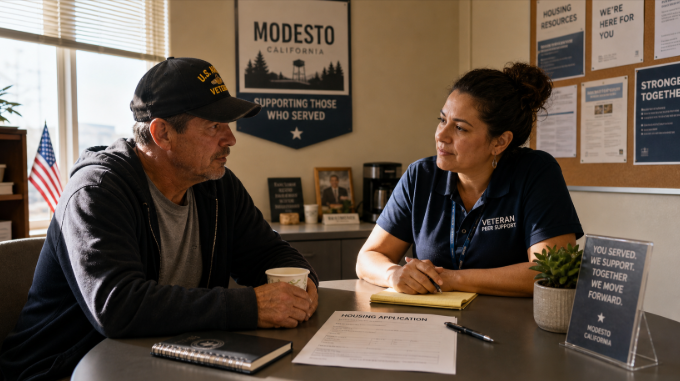
Peer support connects you with real people who have experienced homelessness, trauma, substance use, mental health challenges, or justice involvement themselves. They're not there to judge you or push you through a checklist. They're there because they know what it's like — and they want to help you find your footing.
Here's what peer support can actually do for you:
Help you complete complicated paperwork and applications without feeling lost
Sit with you during hard conversations with housing offices, providers, or landlords
Connect you to the right programs based on your actual situation — not a generic list
Offer a consistent, trustworthy person to check in with as things change
Remind you that your story isn't over
The Central Valley Makes This Even Harder
We want to be honest with you: getting help in the Central Valley comes with real barriers that urban areas don't face as severely.
Transportation is a major one. If you don't have a car and you're in a rural part of Stanislaus or Merced County, getting to a VA office or housing authority can take hours — if it's possible at all. Extreme heat in the summer makes living outside not just uncomfortable but dangerous. Agricultural work schedules don't always leave room for appointments during regular business hours.
We understand these realities because we're here too — in Modesto, in the San Joaquin Valley, working with people navigating these exact conditions every day. Our team can help you figure out what's available locally and how to access it without jumping through impossible hoops.
If you have Medi-Cal, you may also qualify for free help with transportation to appointments, housing navigation, and one-on-one support through programs that most people in the Central Valley don't even know exist. Find out what you might qualify for here.
What We Can Help You With Right Now
We're a peer-led nonprofit based in Modesto. Our team is made up of people with lived experience — people who've been unhoused, in recovery, through the justice system, and on the other side. We're not a clinic and we're not a government office. We're people who've been through it, offering support to people going through it now.
Here's what we can help with:
Finding out what housing programs you may qualify for — including federally funded programs, local transitional housing, and rapid rehousing options
Navigating paperwork — applications, appeals, documentation — we walk through it with you
Connecting to mental health and recovery support alongside housing, because both matter
Food, clothing, and basic needs — if survival needs are pressing right now, start here
Employment and income — if you're ready to look at work or need help keeping up with bills and utilities, we can help with that too.
Reentry support — if you're coming out of incarceration, we know that space well and we don't judge it
One-on-one peer connection — just someone to talk to and think with who's been through something similar
You don't need to know which service you need. Check out our free resources page and we'll figure it out together.
How to Take the First Step Today
The hardest step is often the first one — especially when you've been let down before. We get that. That's why we keep the first step as simple as possible.
Here's what to do right now:
Go to helpishope.org/resources and fill out our free Total Resource Check-In — it takes about 5 minutes on your phone
Answer honestly — the more you share, the more we can find. There are no wrong answers
You'll receive a personalized resource guide based on your situation, usually within 72 hours
That's it. No commitment. No forms to sign. Just honest answers and a real team working to find what's available for you.
Frequently Asked Question
Do I have to be connected to the VA to get housing help as a veteran?
No. While the VA has its own programs, there are housing resources available to veterans that do not require active VA enrollment or a recent service-connected disability rating. We can help you explore options regardless of your VA status.
What if I have a criminal record? Does that disqualify me?
Not always. Many housing programs have evolved to understand that justice involvement is part of the story for many veterans — not the end of it. We can help you find programs that don't automatically exclude you.
What if I'm not ready to stop using drugs or alcohol? Can I still get housing help?
Yes. Housing-first approaches exist specifically because sobriety shouldn't be a prerequisite for having a safe place to sleep. We meet you where you are. If you want to talk about recovery support at the same time, we're here for that too.
What if I'm not sure what I need?
That's completely okay — and it's one of the most common things we hear. Check out the resources page, answer the questions honestly and let us help you figure out the next right step.


