


Feel Left Behind by Technology? Here's How to Get Free Digital Help Near You
- 3 days ago
- 6 min read
Updated: 1 day ago

If technology feels confusing, overwhelming, or just plain frustrating — you are not alone. Millions of adults, especially in communities like Modesto, Stockton, and the broader San Joaquin Valley, have never had the chance to learn basic digital skills. That doesn't mean you can't learn them now. It means no one made it easy enough before.
We're here to change that. If you need help getting online, using a phone, filling out a form, or just figuring out where to start, reach out to our team — free, no judgment, and from people who understand what you're going through.
Why Digital Skills Matter Right Now — Especially in the Central Valley
The world has moved online fast. And in the Central Valley, where transportation is limited, distances are long, and services are stretched thin, not being able to use the internet can cut you off from help you genuinely need.
Here's what's at stake right now:
Healthcare: Telehealth appointments, prescription refills, and patient portals all require basic digital skills. Without them, getting care means long bus rides and longer waits.
Housing assistance: Most housing applications, waitlists, and emergency rental help programs now require online submission.
Job applications: Employers in Modesto, Merced, and Fresno almost always require an online application — even for warehouse, agricultural support, and service jobs.
Benefits: Checking your CalFresh balance, reporting income changes to Medi-Cal, or renewing your benefits now happens online or through an app.
Staying connected: Family, support groups, and care providers all increasingly communicate through phones and apps.
Many adults in the U.S. lack basic digital skills — and that gap is wider in lower-income communities and among people who've experienced housing instability, incarceration, or poverty. This isn't a personal failure. It's a systems failure. And we can help you work around it.
Connect with our team today and tell us where you're starting from. We'll meet you there.
You Are Not Alone: Common Barriers to Getting Online
Before anything else, we want you to know this: the barriers you're facing are real. They are not excuses. They are not signs you can't do this. They are real obstacles that millions of people hit every day — and every one of them has a workaround.
No Device or Internet Access
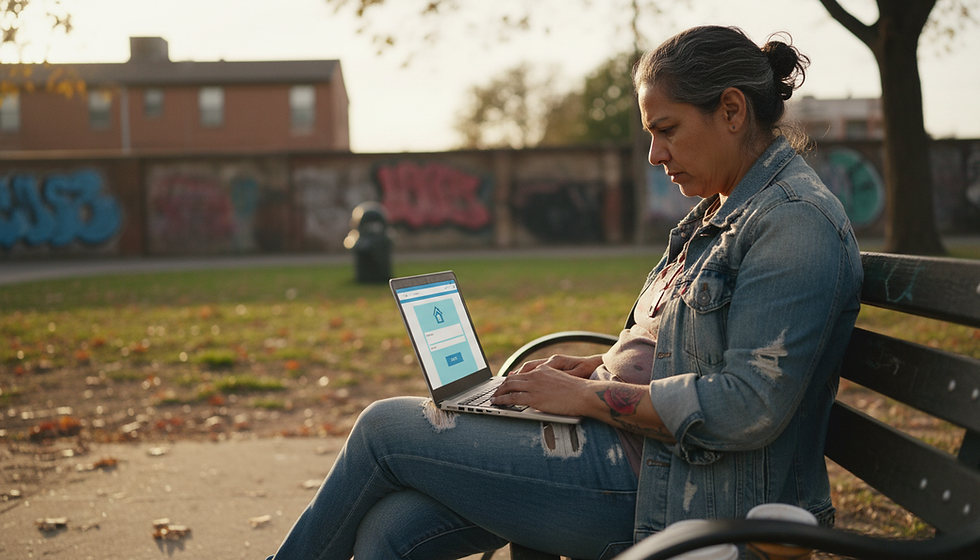
Not having a computer, tablet, or reliable internet is one of the most common reasons people fall behind digitally. In parts of the Central Valley, broadband coverage is still limited. Rural areas around Merced and Fresno face real connectivity gaps that urban areas don't. This is a geographic equity issue — not a personal one.
We can help you find out if you qualify for free or low-cost devices and internet through programs available to Medi-Cal members and low-income households. Visit Hope Hubs or Future Tech Career Finder to learn more about what may be available to you.
Fear of Failure or Embarrassment
A lot of adults feel embarrassed to admit they don't know how to use a computer or smartphone. That shame can be paralyzing. We've heard it countless times from people we work with: "I'm too old." "I'll break it." "I'll look stupid."
Here's the truth: there is no such thing as too old to learn. There is no wrong question. And everyone who has ever used a computer started exactly where you are. Our peer support team — real people who have been through their own struggles — will never make you feel judged for what you don't know yet.
Not Enough Time or Energy
When you're in survival mode — worried about rent, food, health, or safety — learning something new feels impossible. We hear that. Our team works with people who are navigating multiple crises at once like: basic needs (food, clothing, shelter), mental health, health issues or check out our other free resources available. We don't expect you to figure this out on top of everything else. We help you take one small step at a time.
Even 10 minutes a day builds real skills over time. And we can help you decide which skill to start with based on what would help your life most right now.
Language or Literacy Barriers
English-only resources make digital learning harder for the many Central Valley residents who speak Spanish, Hmong, Punjabi, or other languages at home. Many digital tools also assume a reading level that doesn't reflect how people actually communicate.
We work to explain things clearly, in plain language, in the language that works for you. Our resources page is a good starting point — and our team can walk through anything with you one on one.
What We Mean by "Digital Skills" (In Plain English)
When people say "digital literacy," they usually mean a lot of different things. Here's a simple breakdown of what these skills actually look like in real life:
Skill | What It Looks Like in Real Life |
Using a smartphone | Making calls, sending texts, using apps, taking photos |
Using the internet | Searching for information, finding services, reading websites |
Sending and receiving messages, attaching documents | |
Online forms | Filling out job applications, housing applications, benefits renewals |
Video calls | Telehealth appointments, talking to family, support group meetings |
Online safety | Avoiding scams, protecting your passwords and personal info |
Accessing accounts | Logging into health portals, benefits accounts, or job sites |
You don't need to learn all of these at once. Start with the one that would make the biggest difference in your life right now.

How We Help You Get Started — Step by Step
We don't just hand you a pamphlet and send you on your way. We walk with you. Here's what getting digital help from us actually looks like:
Step 1: Tell us what's going on. You don't need to know the right words. Just tell us what you're struggling with. Can't figure out how to use your phone? Not sure how to apply for a job online? Confused by the Medi-Cal portal? Start there. Fill out our resource check-in and let us know.
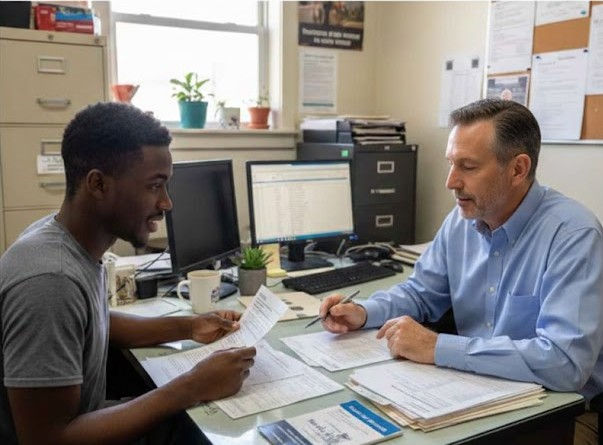
Step 2: We connect you with someone who gets it. You'll be matched with a peer — a real person from the community who has been through their own hard times and knows what it's like to feel lost in a system not built for you. They'll sit with you, explain things without judgment, and help you take your next step.
Getting Online Can Help You Get More Help
Here's something most people don't realize: learning to use the internet can unlock access to help that would otherwise be invisible to you.
For example, if you have Medi-Cal and are dealing with housing instability, mental health challenges, a chronic illness, or substance use, you may qualify for free extra support — a real person who helps coordinate your care, navigate housing, get to appointments, and connect to food and financial resources. This support is already covered by your Medi-Cal. Most people just don't know how to access it.
Getting comfortable online means you can:
Fill out the Total Resource Check-In to find out what you qualify for
Access your Medi-Cal account and benefits
Find and connect with community programs in real time
Stay in contact with support workers, healthcare providers, and family
It takes about 10 minutes, and it could open the door to thousands of dollars in covered services you didn't know were available.
You Don't Have to Do This Alone
Technology is a tool. And like any tool, it's most useful when someone shows you how to use it — patiently, without judgment, at your own pace.
In the Central Valley, too many people are cut off from the help they need because the systems that could help them have moved online without bringing them along. That's not okay. And it's part of why we do this work.
Start with one step. Fill out our free resource check-in, and someone from our team will reach back out with real, practical next steps — based on your actual situation, not a checklist.
You deserve to be connected. We're here to help make that happen.
FAQ: Digital Help for Adults in the Central Valley
I don't have a computer or internet. Can you still help me?
Yes. We can help you find out if you qualify for a free or low-cost device and internet plan. Many people in the Central Valley qualify but don't know it. Reach out to our team and we'll check with you.
I'm not good with technology. Will I feel embarrassed?
Not with us. Our team is made up of real people from this community who know what it's like to feel behind or confused. There are no dumb questions here. Learn more about how peer support works.
Is this free?
Yes. Everything we offer is free. There is no cost to you, ever. See all of our free services here.
I don't speak English well. Can you still help me?
Yes. We work with people who speak Spanish and other languages. Tell us what language you're most comfortable in when you reach out. Book an appointment here.
What if I need help with something beyond just technology?
We help with a lot more than digital skills. If you're dealing with housing, food, mental health, recovery, reentry, or anything else — we can connect you to support.
How do I get started?
The easiest first step is to fill out our free resource check-in. It takes about 10 minutes, and someone from our team will follow up with you personally.

Comments